Roof Storm Damage Checklist for Huntsville Homes
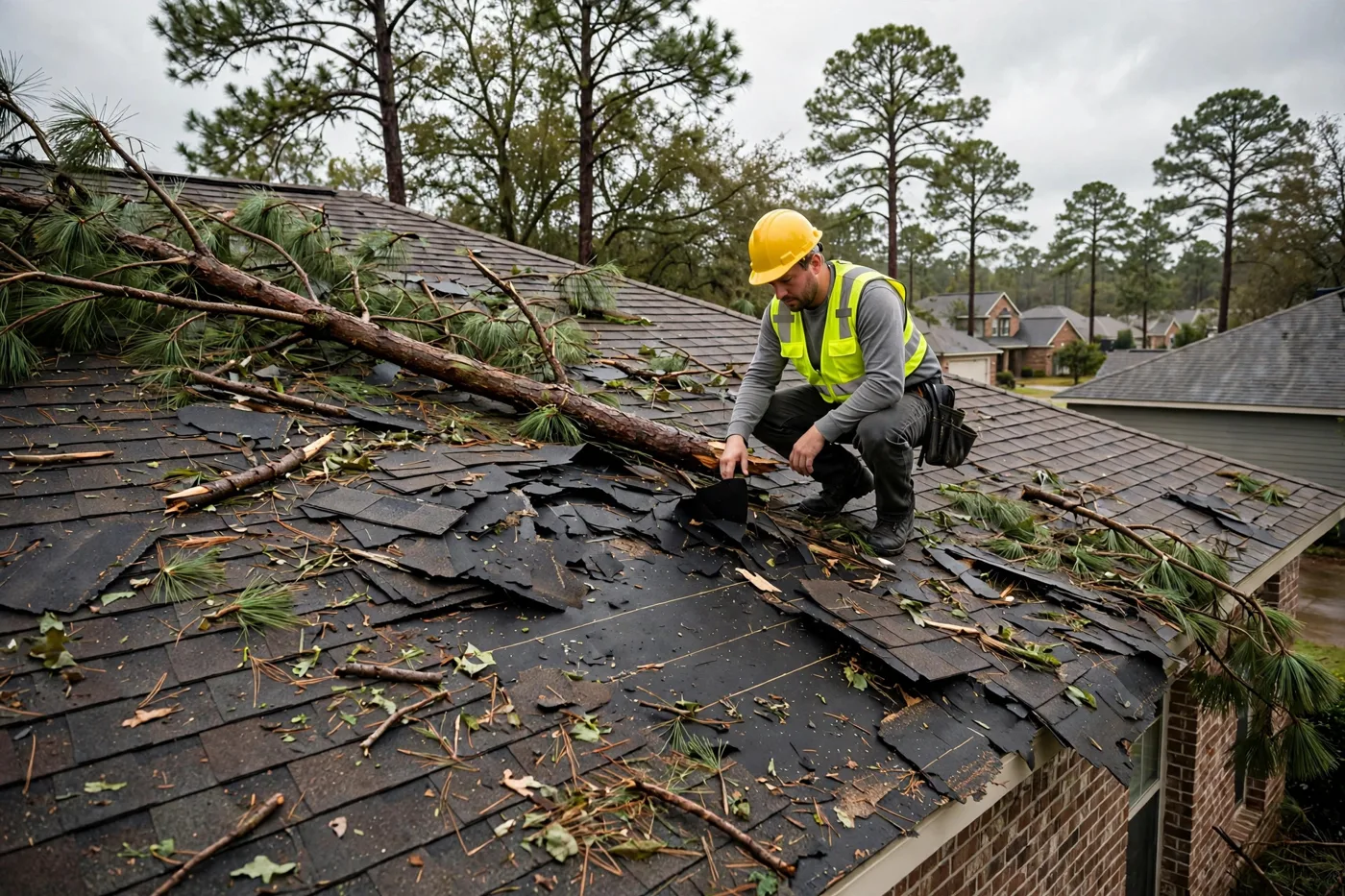
The storm has passed, the power is back, and now you are standing in the yard wondering about the roof. This storm damage checklist walks Huntsville homeowners through what to look for, safely, from the ground, what to photograph, and when to call for a dry-in or an inspection.
Step 1: Stay Off the Roof
A wet, debris-covered roof is one of the most dangerous places around a house. Everything on this checklist can be done from the ground, a ladder at the eave, or the attic. Leave the roof surface itself to a storm damage roofer with the right equipment.
Step 2: Walk the Yard and Street
- Shingle pieces, ridge cap fragments or pieces of flashing on the ground
- Granules piled where downspouts discharge
- Branches on the roof, and any visible puncture or sagging section
- Dented gutters, vent caps or metal trim, soft metals show hail size honestly
Photograph each find with your phone, wide shot and close-up. Timestamps on phone photos are useful documentation.
Step 3: Check the Attic and Ceilings
With a flashlight, look for daylight through the decking, wet insulation, and water trails on rafters. Indoors, note every ceiling stain, even ones that look old, and photograph them. A stain that grows in the next rain tells the roofer exactly where to start tracing, which is the heart of leak repair.
Step 4: Decide, Dry-In or Inspection?
If the roof is open, missing sections, a puncture, water entering now, that is an emergency: you need tarping or a dry-in before the next rain band, not an appointment next week. If the roof looks intact but you found debris, dents or a new stain, schedule an inspection within days; hidden wind damage is common and shows up at the next storm.
Step 5: Document Before You Clean Up
Insurers expect two things: that you prevented further damage (the dry-in) and that the damage is documented. Keep the roofer's photos and written assessment, your own photos, and every invoice. Do not throw away damaged shingles or materials until your adjuster has had a chance to see the documentation.
The Huntsville Pattern
Walker County storms tend to damage roofs at the details, lifted ridge caps, creased shingles on the windward slope, flashing torn at chimneys, rather than destroying whole roofs. That is repairable damage, and catching it early is the difference between a repair bill and a replacement conversation.
What a Dry-In Actually Involves
A dry-in is not just a blue tarp thrown over the hole. The roofer removes loose debris, checks the decking around the opening, lays roofing felt or a self-adhered membrane over the damaged area, and secures a tarp so its edges shed water past the damage, fastened so the next rain band does not lift it. Done properly, a dry-in buys you days or weeks of dry interior while the permanent repair and any insurance steps are arranged. Done badly, it channels water under the tarp and makes things worse, which is why this is a job for an emergency roofer, not a ladder and a staple gun.
Filing the Claim: A Simple Order of Operations
First, make the roof watertight and document everything, insurers expect mitigation. Second, get the roofer's written assessment and photographs. Third, file the claim and note the claim number on every document. Fourth, when the adjuster visits, having your roofer present helps make sure every slope and component is inspected. Finally, approve the permanent repair only against a written quote you understand. Sam Houston Roof Pros does not file claims or negotiate with insurers, that stays between you, your roofer and your carrier, but the documentation your roofer produces is what the whole process runs on.
Roof problem in Huntsville?
One call connects you with an independent local roofer, inspection first, written quote, no obligation.